
What Is a Self-Employed Mortgage?
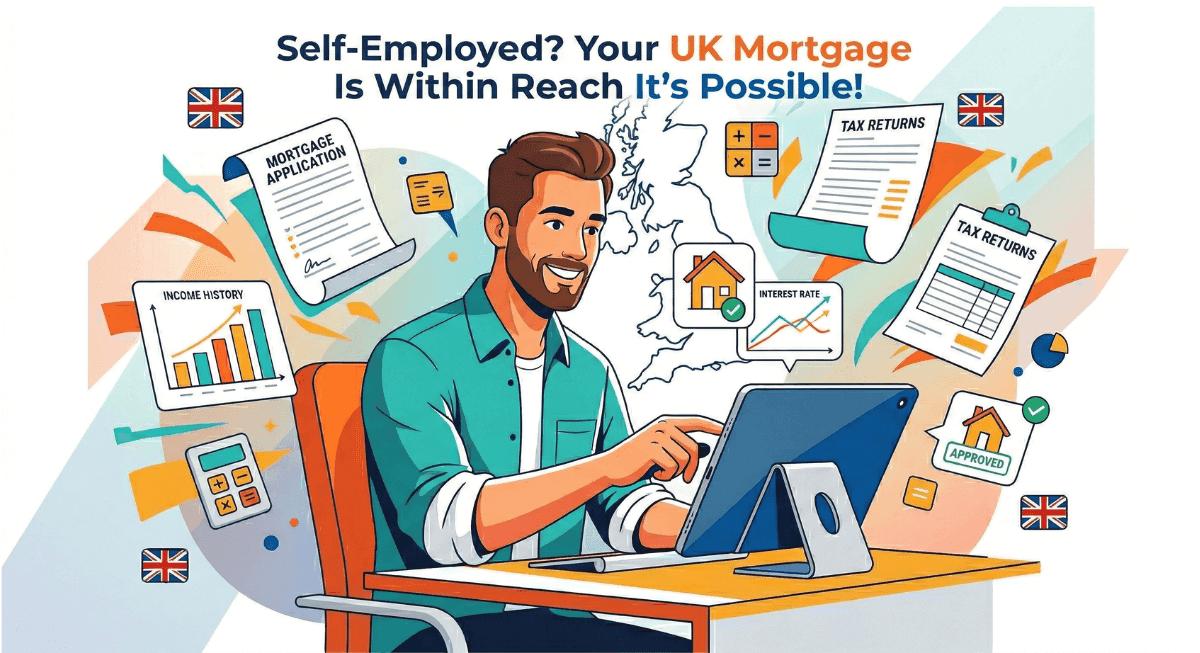
A self-employed mortgage is not a separate type of home loan. It is a standard mortgage designed for individuals who earn their income through self-employment rather than traditional employment. Lenders assess your financial stability using business records, tax documents and bank statements instead of regular payslips.
Who Qualifies as Self-Employed?
Most lenders consider you self-employed if you own a significant share of a business or receive your primary income independently.
- Sole traders
- Freelancers
- Contractors
- Limited company directors
- Business owners
- Consultants
- Partnerships
- Gig economy professionals
How Do Lenders Assess Self-Employed Applicants?
Lenders review your financial history carefully to determine whether your income is stable and sufficient to support mortgage repayments.
- Annual income
- Business profitability
- Length of self-employment
- Tax payment history
- Credit score
- Existing financial commitments
- Savings and deposit
- Business stability
Many lenders prefer applicants with at least one or two years of trading history, although some may consider newer businesses depending on their financial performance.
Documents You Will Typically Need
- Government-issued photo identification
- Proof of address
- Personal bank statements
- Business bank statements
- Tax returns
- SA302s or tax calculation summaries
- Business accounts
- Accountant’s certificate (if required)
- Proof of deposit
- Details of existing financial commitments
Benefits of a Self-Employed Mortgage
Access to Homeownership
Being self-employed does not prevent you from buying a home. Many lenders now offer mortgage solutions designed for self-employed applicants.
Flexible Mortgage Products
- Fixed-rate mortgages
- Variable-rate mortgages
- Tracker mortgages
- Offset mortgages
- Buy-to-let mortgages
Competitive Interest Rates
Applicants with strong financial records, healthy deposits and good credit histories may qualify for competitive mortgage rates.
Build Long-Term Wealth
Owning property allows self-employed individuals to build equity while benefiting from potential long-term property value growth.
Common Challenges
- Irregular income patterns
- Tax-efficient accounting reducing declared income
- Limited trading history
- Complex business structures
How to Improve Your Chances of Approval
- Maintain accurate financial records.
- Improve your credit score.
- Save a larger deposit.
- Keep business finances healthy.
- Avoid taking on unnecessary debt before applying.
- Prepare all supporting documentation.
- Work with an experienced mortgage adviser.
Choosing the Right Mortgage
Before selecting a mortgage product, compare:
- Interest rates
- Loan term
- Monthly repayments
- Early repayment charges
- Product fees
- Deposit requirements
- Overpayment flexibility
- Customer support
Why Preparation Matters
Well-prepared financial records, stable business performance and complete documentation can significantly improve your chances of mortgage approval while reducing delays during underwriting.
Final Thoughts
Being self-employed should never be a barrier to buying a home. With careful preparation, accurate financial records and guidance from an experienced mortgage adviser, many self-employed applicants successfully secure competitive mortgage deals. Choosing the right lender and presenting a strong financial profile can help turn your homeownership goals into reality.
Disclaimer: This article is provided for general information only and does not constitute mortgage, financial or legal advice. Mortgage eligibility, lending criteria, interest rates and product availability vary between lenders. Always seek professional advice before making financial decisions.